Lanthanum
Lanthanide · Period 6 · f-block
The 'hidden' metal that opens the lanthanide series
- Atomic mass
- 138.905 u
- State at 25 °C
- Solid
- Electronegativity
- 1.1
- Melting point
- 919.9 °C
- Boiling point
- 3,463.9 °C
- Configuration
- [Xe] 5d16s2
Nucleus drawn at reduced count for clarity. Drag to rotate.
Lanthanum, explained
Video lesson in production
Bhavya’s explainer for this element will play here.
Overview
Lanthanum is a soft, silvery-white metal that gives its name to the lanthanides, the fifteen elements from lanthanum to lutetium. Its configuration is [Xe] 5d1 6s2: the 4f subshell that the following elements fill is still empty, so chemically lanthanum behaves like scandium and yttrium in group 3. It loses all three outer electrons to form La^3+, its only important oxidation state, and with no f electrons this ion is colourless and non-magnetic. Lanthanum is reactive, tarnishing in air within hours and slowly releasing hydrogen from cold water.
Among the rare earth elements, lanthanum is relatively plentiful, more abundant in the crust than lead. Its largest use is in the zeolite catalysts that crack heavy petroleum into petrol. Lanthanum oxide raises the refractive index of glass while keeping dispersion low, so it appears in high-quality camera and telescope lenses. Alloys based on LaNi5 absorb and release hydrogen reversibly, which made them the negative electrodes of nickel-metal hydride batteries in early hybrid cars. Lanthanum hexaboride emits electrons readily when heated and serves as the cathode in electron microscopes, and lanthanum carbonate is a medicine that binds phosphate in kidney patients.
Discovery
In 1839 Carl Gustaf Mosander, a student of Berzelius in Stockholm, partly decomposed cerium nitrate by heating it and found that dilute nitric acid extracted a new oxide. Because the element had been hidden inside cerium minerals, Berzelius suggested the name lanthana, from the Greek lanthanein, 'to lie hidden'. Lanthanum metal was not prepared in reasonably pure form until 1923.
- Where it’s found
- Lanthanum makes up about 30 parts per million of the crust and is extracted with other light rare earths from bastnäsite and monazite, mainly in China.
- What it’s used for
- Petroleum cracking catalysts
- High-index optical glass
- Nickel-metal hydride batteries
- Electron microscope cathodes
- Phosphate-binding medicine
- Hydrogen storage alloys
- In living things
- Lanthanum has no role in humans and has low toxicity. Some methane-oxidizing bacteria use lanthanides as cofactors in methanol dehydrogenase enzymes.
- Safety
- Lanthanum metal can ignite when finely divided and reacts with water; its compounds are of low to moderate toxicity.
How it compares
Where Lanthanum sits among all 118 elements on the trends that shape the table.
- Electronegativity1.1Pauling
#87 of 100 elements with data
- Ionization energy538kJ/mol
#90 of 104 elements with data
- Atomic radius195pm
#7 of 95 elements with data
- Electron affinity53kJ/mol
#48 of 109 elements with data
- Density6.16g/cm³
#73 of 114 elements with data
- Melting point1,190K
#54 of 110 elements with data
- Density
- 6.16 g/cm³
- Atomic radius
- 195 pm
- Covalent radius
- 180 pm
- Molar heat
- 27.11 J/(mol·K)
- Appearance
- silvery white
- Discovered by
- Carl Gustaf Mosander
Inside the atom
57 electrons arranged in 6 shells: 2 · 8 · 18 · 18 · 9 · 2.
Orbital diagram
1s2 2s2 2p6 3s2 3p6 4s2 3d10 4p6 5s2 4d10 5p6 6s2 5d1 · shorthand [Xe] 5d16s2
- 1s2
- 2s2
- 2p6
- 3s2
- 3p6
- 4s2
- 3d10
- 4p6
- 5s2
- 4d10
- 5p6
- 6s2
- 5d1
Each box is an orbital holding up to two electrons of opposite spin. Highlighted subshells hold the valence electrons that decide how Lanthanum bonds.
Ionization energies
Signature reactions
The chemistry Lanthanum is known for.
Redox · Oxidation
Tarnishing in air
Lanthanum oxidizes quickly in air, and a cut surface dulls within hours. When heated, it burns brightly to white lanthanum oxide, the compound used in optical glass.
Conditions: room temperature, faster when heated
Redox · Single displacement
Reaction with water
Lanthanum releases hydrogen from water and forms insoluble white lanthanum hydroxide. Its reactivity places it between the alkaline earth metals and aluminium.
Conditions: slow in cold water, faster when hot
Reversible absorption
Hydrogen storage
LaNi5 soaks up hydrogen into gaps in its crystal at modest pressure and releases it when warmed or depressurized. This alloy family stores the hydrogen in nickel-metal hydride batteries.
Conditions: a few atmospheres, room temperature
Where you’ll meet it

Toyota Prius
Prius hybrids used lanthanum-based nickel-metal hydride batteries.
Photo: Wikimedia Commons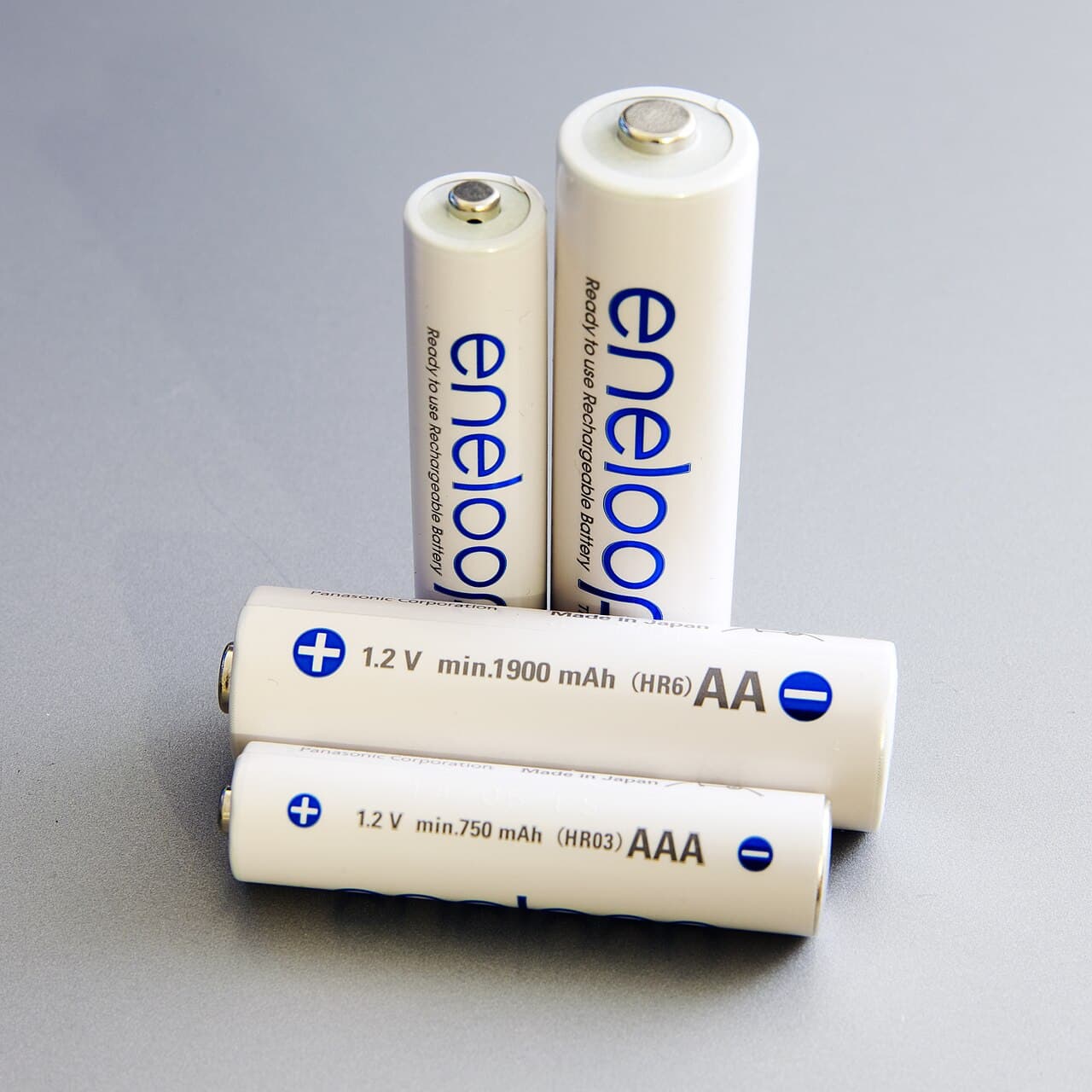
Nickel-metal hydride battery
Rechargeable NiMH cells store hydrogen in a lanthanum-nickel alloy electrode.
Photo: Wikimedia Commons
Camera lens
Lanthanum oxide glass in camera lenses bends light strongly with little colour fringing.
Photo: Wikimedia Commons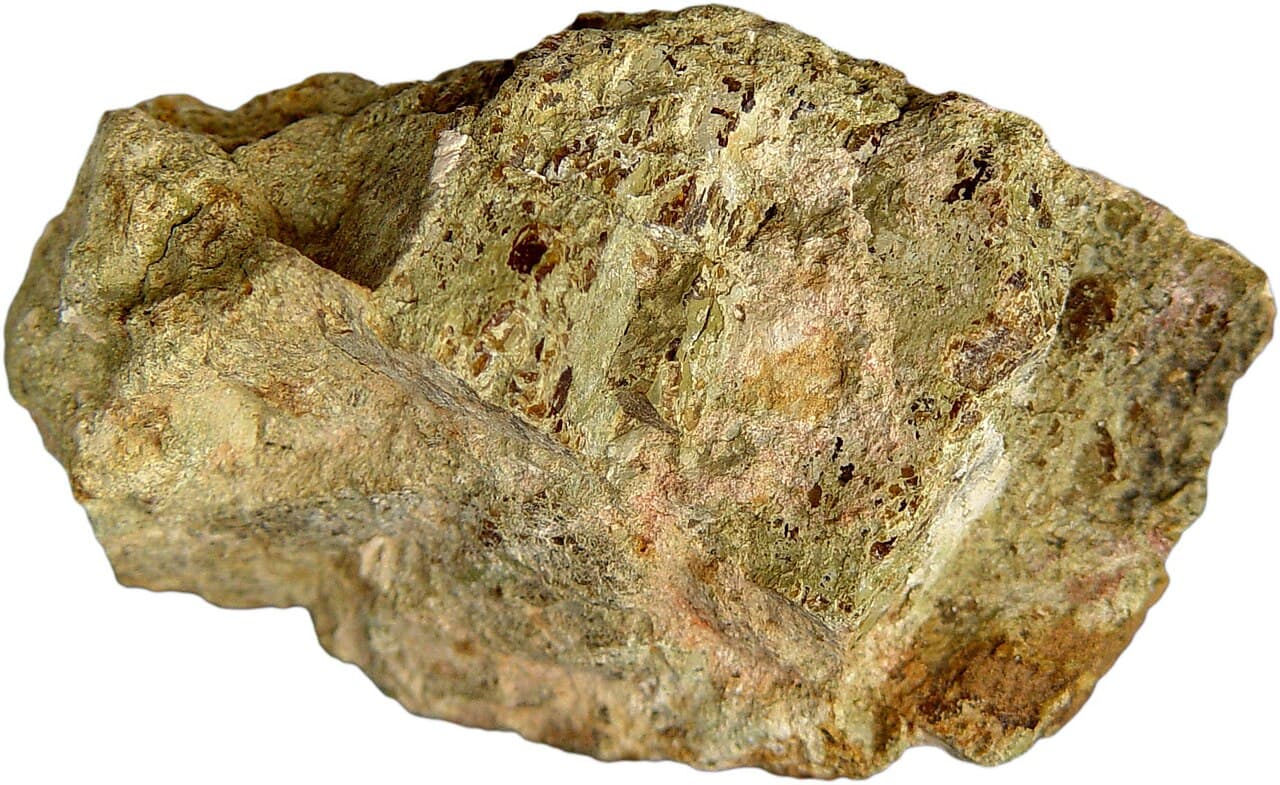
Bastnäsite
Bastnäsite, a rare earth fluorocarbonate, is a major ore of lanthanum.
Photo: Wikimedia Commons


Research
No research on Lanthanum yet
When Bhavya publishes a project that studies Lanthanum, it will be linked here.