Thulium
Lanthanide · Period 6 · f-block
The rarest stable lanthanide, named for the far north
- Atomic mass
- 168.934 u
- State at 25 °C
- Solid
- Electronegativity
- 1.25
- Melting point
- 1,544.9 °C
- Boiling point
- 1,949.9 °C
- Configuration
- [Xe] 4f13 6s2
Nucleus drawn at reduced count for clarity. Drag to rotate.
Thulium, explained
Video lesson in production
Bhavya’s explainer for this element will play here.
Overview
Thulium is the least abundant of the naturally occurring lanthanides, at about half a part per million in the crust. Its configuration is [Xe]4f13 6s2, so the Tm3+ ion has a 4f shell just one electron short of being full. Like other lanthanides it is a soft, silvery metal that tarnishes slowly in air, and its salts are pale green. A divalent state, Tm2+, also exists in a few compounds, though less readily than for its neighbour ytterbium.
Thulium's applications come from its nucleus and its electrons. Bombarding thulium-169, its only stable isotope, with neutrons produces thulium-170, a gamma emitter with a 128-day half-life used as the source in portable X-ray devices. Thulium-doped lasers emit around 2 micrometres, a wavelength strongly absorbed by water, which surgeons use to vaporise prostate tissue and break up stones. Thulium-doped fibres are also used to amplify optical signals in the S-band of telecommunications.
Discovery
Swedish chemist Per Teodor Cleve discovered thulium in 1879 while studying impurities in erbium oxide, separating a brown fraction he named holmia and a green fraction he named thulia. He named thulium after Thule, the ancient name for a mythical land in the far north. Pure thulium compounds were extremely hard to obtain: in 1911 American chemist Charles James performed about 15,000 recrystallisations of thulium bromate to get a pure sample.
- Where it’s found
- About 0.5 parts per million of Earth's crust, extracted mainly from monazite and ion-adsorption clays.
- What it’s used for
- Portable X-ray sources
- Surgical thulium lasers
- Fibre-optic amplifiers
- Ceramic magnetic materials
- Research
- In living things
- No known biological role; it has low toxicity.
- Safety
- Bulk metal is relatively safe; powders can ignite, and thulium-170 sources are radioactive and need shielding.
How it compares
Where Thulium sits among all 118 elements on the trends that shape the table.
- Electronegativity1.25Pauling
#74 of 100 elements with data
- Ionization energy597kJ/mol
#69 of 104 elements with data
- Atomic radius175pm
#25 of 95 elements with data
- Electron affinity99kJ/mol
#30 of 109 elements with data
- Density9.32g/cm³
#43 of 114 elements with data
- Melting point1,820K
#25 of 110 elements with data
- Density
- 9.32 g/cm³
- Atomic radius
- 175 pm
- Covalent radius
- 164 pm
- Molar heat
- 27.03 J/(mol·K)
- Appearance
- silvery gray
- Discovered by
- Per Teodor Cleve
Inside the atom
69 electrons arranged in 6 shells: 2 · 8 · 18 · 31 · 8 · 2.
Orbital diagram
1s2 2s2 2p6 3s2 3p6 4s2 3d10 4p6 5s2 4d10 5p6 6s2 4f13 · shorthand [Xe] 4f13 6s2
- 1s2
- 2s2
- 2p6
- 3s2
- 3p6
- 4s2
- 3d10
- 4p6
- 5s2
- 4d10
- 5p6
- 6s2
- 4f13
Each box is an orbital holding up to two electrons of opposite spin. Highlighted subshells hold the valence electrons that decide how Thulium bonds.
Ionization energies
Signature reactions
The chemistry Thulium is known for.
Redox · Combustion
Burning in air
Thulium burns to form a pale green oxide. The oxide is the form in which thulium is purified and traded.
Conditions: heating in air
Redox · Single displacement
Reaction with water
Thulium reacts slowly with water to produce hydrogen and thulium hydroxide. The reaction is sluggish, consistent with thulium's position near the end of the lanthanide series.
Conditions: slow in cold water, faster when hot
Nuclear · Neutron capture
Neutron activation
Stable thulium-169 captures a neutron to become radioactive thulium-170. This isotope emits low-energy gamma rays, making it a compact source for portable radiography.
Conditions: neutron flux in a nuclear reactor
Where you’ll meet it

Thule
Thulium's name comes from Thule, the legendary land at the northern edge of the ancient world.
Photo: Wikimedia Commons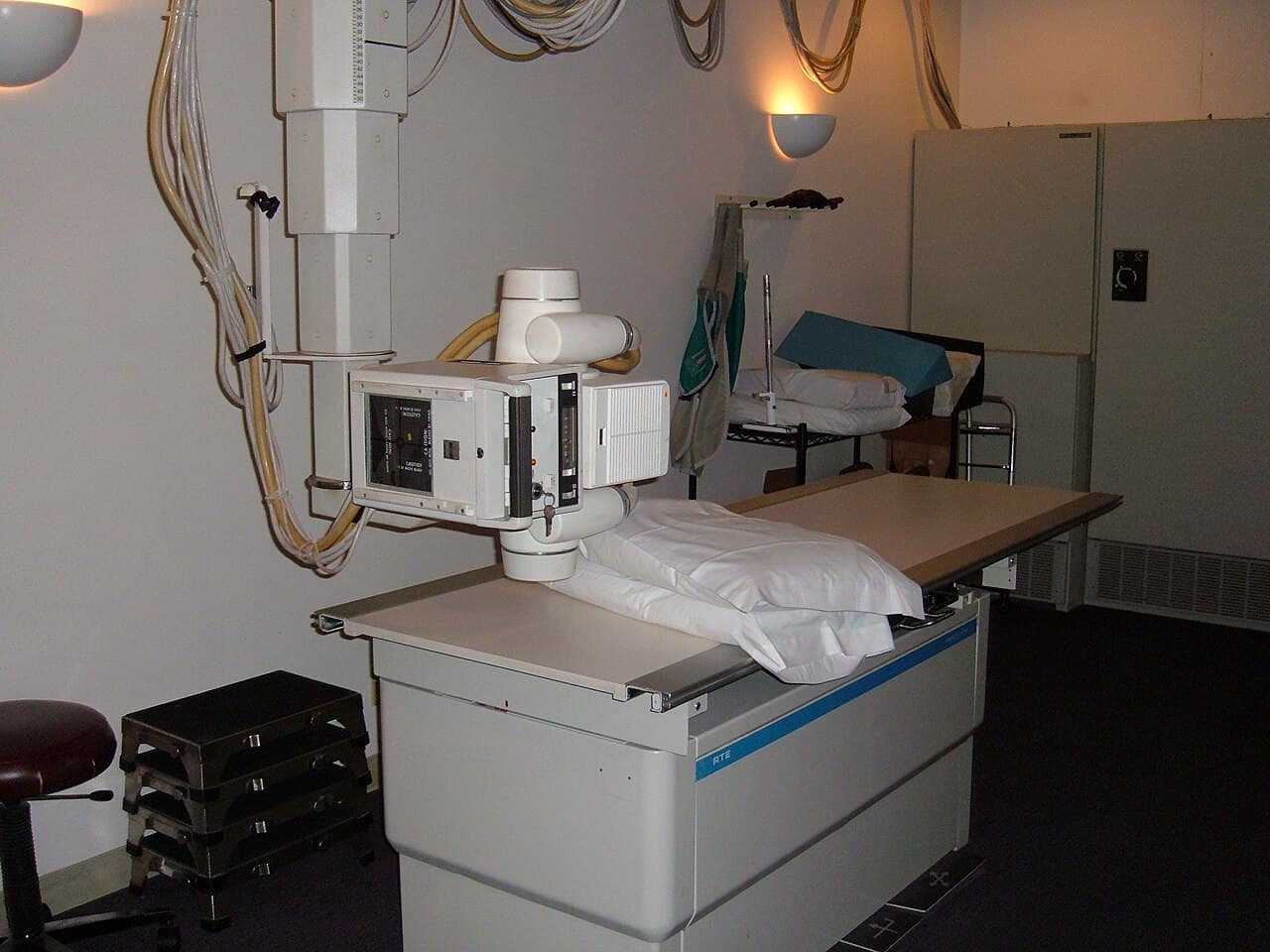
X-ray machine
Thulium-170 can replace an X-ray tube as the radiation source in portable radiography units.
Photo: Wikimedia Commons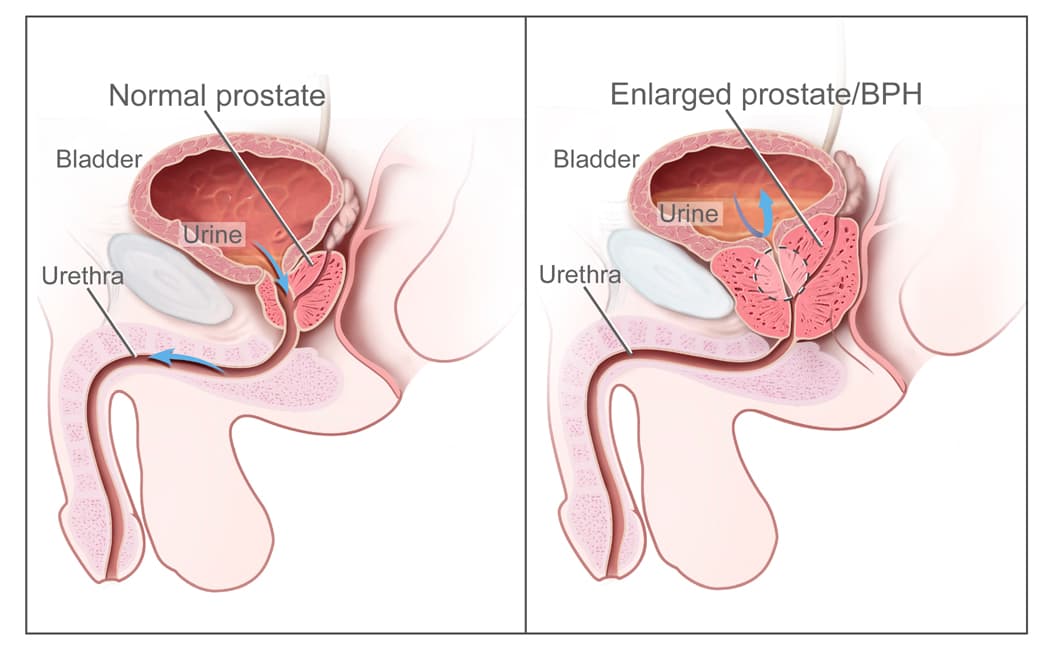
Benign prostatic hyperplasia
Thulium lasers are used to remove excess prostate tissue in treating this condition.
Photo: Wikimedia Commons


Research
No research on Thulium yet
When Bhavya publishes a project that studies Thulium, it will be linked here.