Rhenium
Transition metal · Period 6 · Group 7 · d-block
The last stable element found, and one of the rarest
- Atomic mass
- 186.207 u
- State at 25 °C
- Solid
- Electronegativity
- 1.9
- Melting point
- 3,185.9 °C
- Boiling point
- 5,595.9 °C
- Configuration
- [Xe] 4f14 5d5 6s2
Nucleus drawn at reduced count for clarity. Drag to rotate.
Rhenium, explained
Video lesson in production
Bhavya’s explainer for this element will play here.
Overview
Rhenium is one of the rarest elements in Earth's crust, at about one part per billion. It sits in group 7 with the configuration [Xe]4f14 5d5 6s2, and its seven valence electrons give it a very wide range of oxidation states, from −1 to +7. The most stable is +7, found in the perrhenate ion, ReO₄⁻, and in volatile yellow Re2O7. Strong metallic bonding gives the metal a melting point of 3186 °C, the third highest of any element, and the highest boiling point of all.
Rhenium does not form its own ore deposits. Instead it substitutes for molybdenum in molybdenite, and it is collected from the flue dust when that mineral is roasted, mostly in Chile. Most rhenium goes into nickel-based superalloys for single-crystal jet-engine turbine blades, where a few percent of rhenium slows creep at high temperatures. Platinum-rhenium catalysts are used in catalytic reforming, which converts low-octane naphtha into high-octane petrol.
Discovery
Rhenium was discovered in 1925 by German chemists Walter Noddack, Ida Tacke (later Ida Noddack) and Otto Berg, who detected its X-ray spectral lines in platinum ores and in columbite, and later in gadolinite and molybdenite. They named it after the Rhine (Latin Rhenus). In 1928 they extracted one gram of rhenium from 660 kilograms of molybdenite. It was the last stable element to be discovered.
- Where it’s found
- About 1 part per billion of Earth's crust; it is recovered from flue dusts when molybdenite from copper mines is roasted.
- What it’s used for
- Jet-engine superalloys
- Petroleum reforming catalysts
- Thermocouples
- Filaments and electrical contacts
- X-ray tube targets
- In living things
- No biological role; its toxicity is poorly studied but appears low.
- Safety
- Bulk metal is low hazard; Re2O7 and perrhenic acid are corrosive and fine powder is flammable.
How it compares
Where Rhenium sits among all 118 elements on the trends that shape the table.
- Electronegativity1.9Pauling
#36 of 100 elements with data
- Ionization energy760kJ/mol
#39 of 104 elements with data
- Atomic radius135pm
#59 of 95 elements with data
- Electron affinity5.83kJ/mol
#86 of 109 elements with data
- Density21g/cm³
#12 of 114 elements with data
- Melting point3,460K
#3 of 110 elements with data
- Density
- 21 g/cm³
- Atomic radius
- 135 pm
- Covalent radius
- 131 pm
- Molar heat
- 25.48 J/(mol·K)
- Appearance
- silvery-grayish
- Discovered by
- Masataka Ogawa
Inside the atom
75 electrons arranged in 6 shells: 2 · 8 · 18 · 32 · 13 · 2.
Orbital diagram
1s2 2s2 2p6 3s2 3p6 4s2 3d10 4p6 5s2 4d10 5p6 6s2 4f14 5d5 · shorthand [Xe] 4f14 5d5 6s2
- 1s2
- 2s2
- 2p6
- 3s2
- 3p6
- 4s2
- 3d10
- 4p6
- 5s2
- 4d10
- 5p6
- 6s2
- 4f14
- 5d5
Each box is an orbital holding up to two electrons of opposite spin. Highlighted subshells hold the valence electrons that decide how Rhenium bonds.
Ionization energies
Signature reactions
The chemistry Rhenium is known for.
Redox · Combustion
Oxidation to rhenium heptoxide
Rhenium burns to a yellow oxide that is volatile, subliming at about 360 °C. That volatility is what lets rhenium escape into the flue gases when molybdenite is roasted.
Conditions: heating in air or oxygen above about 400 °C
Acid–base · Hydration
Forming perrhenic acid
Rhenium heptoxide dissolves in water to give perrhenic acid, a strong acid. Flue gases are scrubbed with water so the rhenium can be captured in this form.
Conditions: dissolving in water
Redox · Metal extraction
Reduction of ammonium perrhenate
Ammonium perrhenate crystals are heated in hydrogen, leaving a grey rhenium powder. The powder is then pressed and sintered into bars.
Conditions: about 800 °C in hydrogen
Where you’ll meet it


Jet engine
Turbine blades in modern jet engines are single-crystal superalloys that contain a few percent of rhenium.
Photo: Wikimedia Commons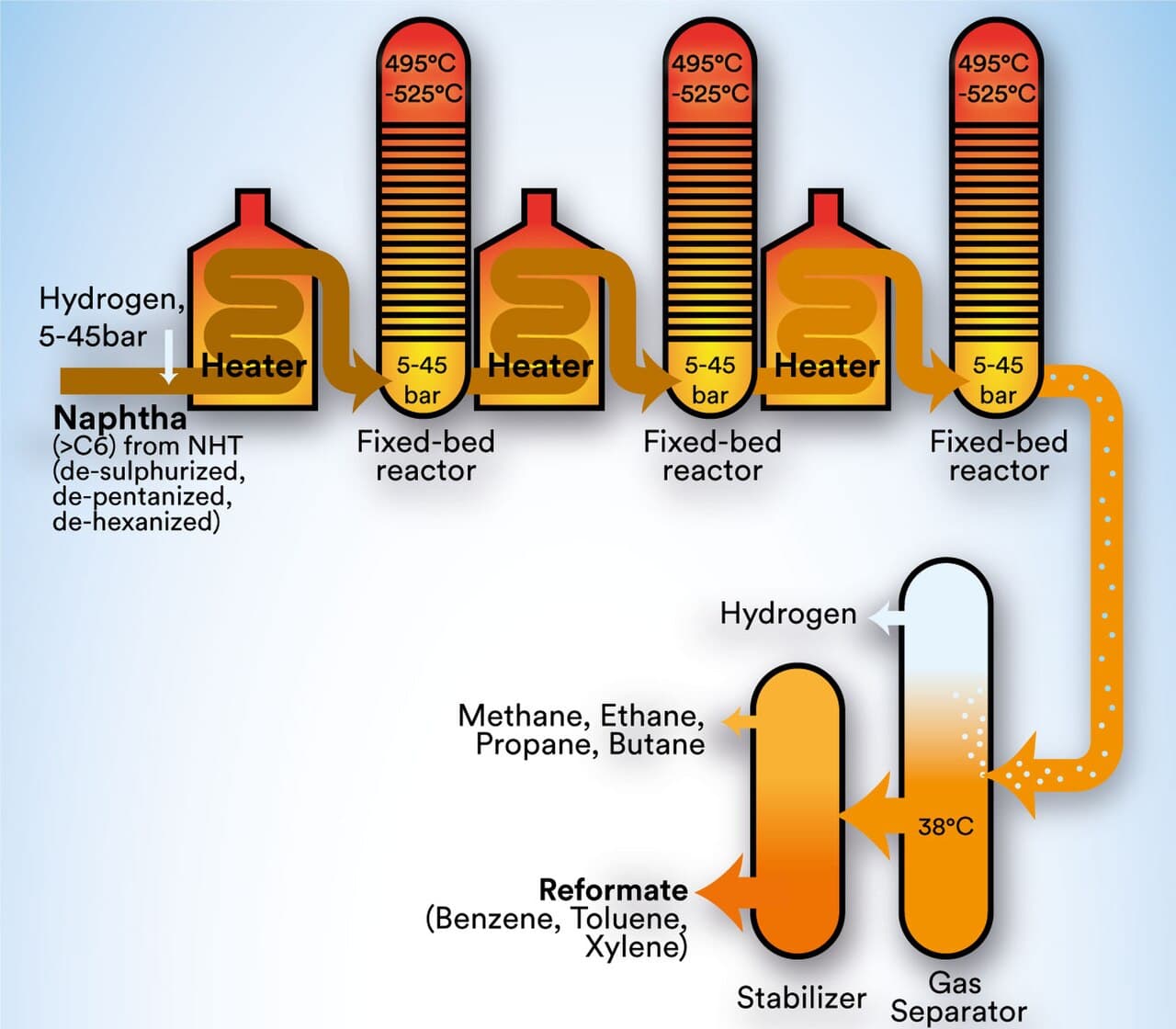
Catalytic reforming
Platinum-rhenium catalysts turn low-octane naphtha into high-octane petrol.
Photo: Wikimedia Commons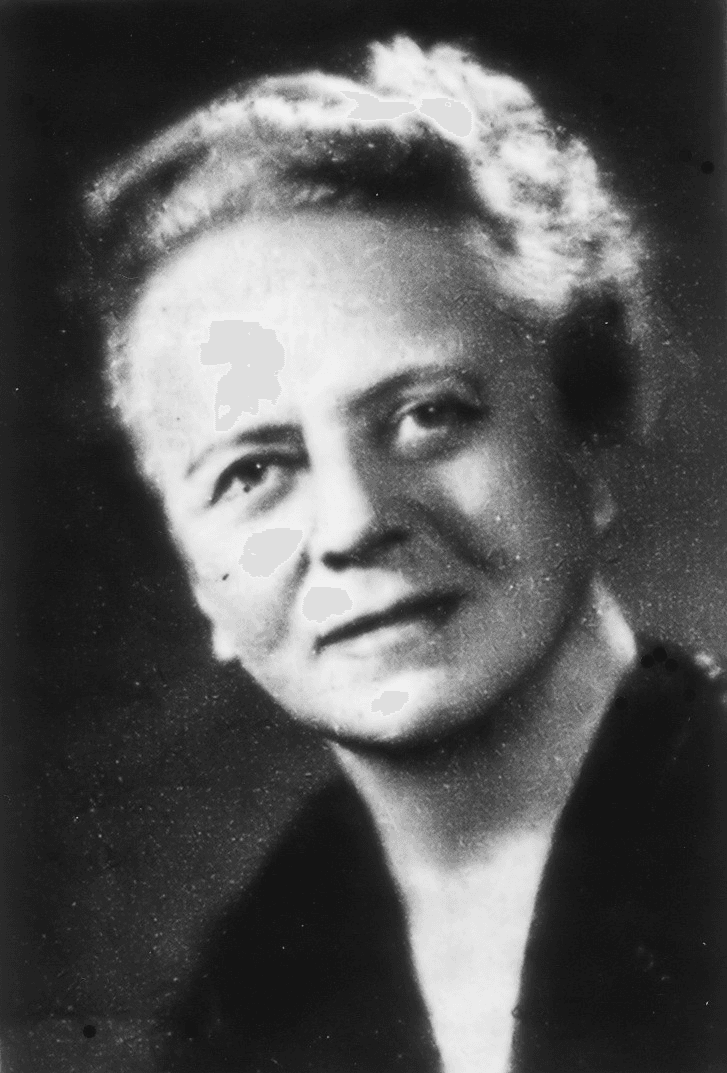


Research
No research on Rhenium yet
When Bhavya publishes a project that studies Rhenium, it will be linked here.