Aluminium
Post-transition metal · Period 3 · Group 13 · p-block
Once costlier than silver, now wrapped around everything
- Atomic mass
- 26.982 u
- State at 25 °C
- Solid
- Electronegativity
- 1.61
- Melting point
- 660.3 °C
- Boiling point
- 2,469.9 °C
- Configuration
- [Ne] 3s2 3p1
Aluminium, explained
Overview
Aluminium ([Ne]3s2 3p1) readily gives up three electrons to form Al3+, and its standard electrode potential (-1.66 V) marks it as a reactive metal. Yet aluminium objects last for decades because the surface instantly grows a transparent layer of aluminium oxide only a few nanometres thick, which seals the metal from air and water. The small, highly charged Al3+ ion makes aluminium amphoteric: the metal and its oxide dissolve in both acids and strong bases, releasing hydrogen in the latter case.
Aluminium is the most abundant metal in Earth's crust, about 8% by mass, but it is locked in very stable compounds, so extracting it takes a great deal of energy. Bauxite ore is refined into alumina by the Bayer process, and the alumina is dissolved in molten cryolite and split by electrolysis in the Hall-Héroult process. Recycling skips this step and uses only about 5% of the energy. With a density of 2.70 g/cm3, about a third that of steel, aluminium is used in aircraft, cans, cables and buildings.
Discovery
Hans Christian Ørsted produced impure aluminium in 1825 by reducing aluminium chloride with potassium amalgam, and Friedrich Wöhler improved the method in 1827. When Henri Sainte-Claire Deville developed sodium reduction in 1854, the metal was still rarer than silver. In 1886 Charles Martin Hall in the United States and Paul Héroult in France independently invented electrolytic production, making it cheap. Humphry Davy named it after alum (Latin alumen); 'aluminium' is the IUPAC spelling, 'aluminum' the American one.
- Where it’s found
- Aluminium is never found as a native metal; it is mined as bauxite, mainly in Australia, Guinea and China, refined to alumina and smelted electrolytically.
- What it’s used for
- Beverage cans
- Aircraft structures
- Power transmission lines
- Window frames
- Kitchen foil
- Water treatment
- In living things
- Aluminium has no known biological role. It is poorly absorbed and normally excreted by the kidneys, but it can accumulate to toxic levels in people with kidney failure, and dissolved Al3+ in acidic soils damages plant roots.
- Safety
- Bulk aluminium is safe, but fine aluminium powder is flammable and can form explosive dust clouds. Molten aluminium contacting water can cause violent steam explosions.
How it compares
Where Aluminium sits among all 118 elements on the trends that shape the table.
- Electronegativity1.61Pauling
#50 of 100 elements with data
- Ionization energy578kJ/mol
#81 of 104 elements with data
- Atomic radius125pm
#75 of 95 elements with data
- Electron affinity41.8kJ/mol
#59 of 109 elements with data
- Density2.7g/cm³
#88 of 114 elements with data
- Melting point933K
#66 of 110 elements with data
- Density
- 2.7 g/cm³
- Atomic radius
- 125 pm
- Covalent radius
- 126 pm
- Molar heat
- 24.2 J/(mol·K)
- Appearance
- silvery gray metallic
- Discovered by
- —
Inside the atom
13 electrons arranged in 3 shells: 2 · 8 · 3.
Orbital diagram
1s2 2s2 2p6 3s2 3p1 · shorthand [Ne] 3s2 3p1
- 1s2
- 2s2
- 2p6
- 3s2
- 3p1
Each box is an orbital holding up to two electrons of opposite spin. Highlighted subshells hold the valence electrons that decide how Aluminium bonds.
Ionization energies
Signature reactions
The chemistry Aluminium is known for.
Redox · Single displacement
Thermite reaction
Powdered aluminium reduces iron oxide in a shower of sparks, reaching about 2500 °C and producing molten iron. The reaction is used to weld railway tracks in the field. It works because aluminium oxide is far more stable than iron oxide.
Conditions: ignition with a magnesium fuse
Redox · Electrolysis
Hall-Héroult electrolysis
Alumina dissolved in molten cryolite is electrolysed; aluminium collects as a liquid at the cathode while oxygen reacts with the carbon anodes to form CO2. Smelters consume roughly 13-15 kWh of electricity per kilogram of aluminium. That is why they are often built near cheap hydroelectric power.
Conditions: about 960 °C, alumina dissolved in molten cryolite
Redox · Amphoteric
Aluminium dissolving in alkali
Sodium hydroxide dissolves the protective oxide film and then the metal itself, releasing bubbles of hydrogen and forming soluble aluminate. This reaction is why aluminium cookware should not be cleaned with strong alkaline cleaners. Some drain cleaners use it to generate heat and gas that loosen clogs.
Conditions: room temperature, concentrated NaOH
Watch Aluminium react in 3D
Where you’ll meet it
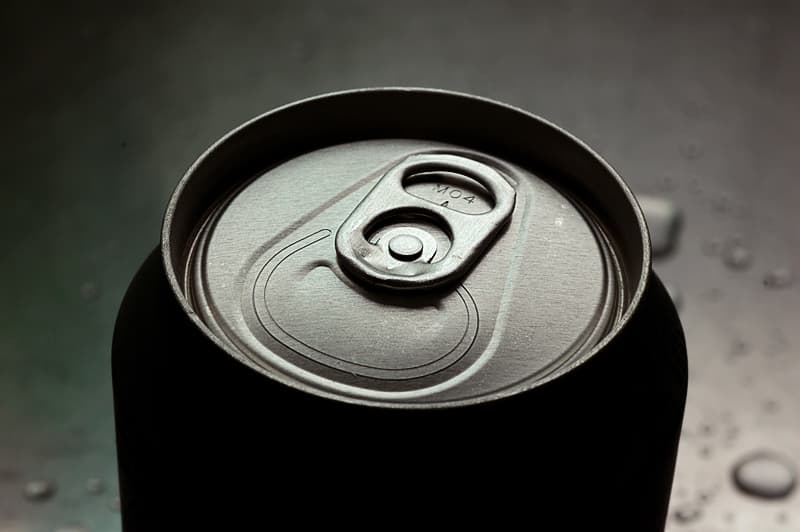
Aluminum can
Hundreds of billions of aluminium drink cans are made each year, and most are recyclable indefinitely.
Photo: Wikimedia Commons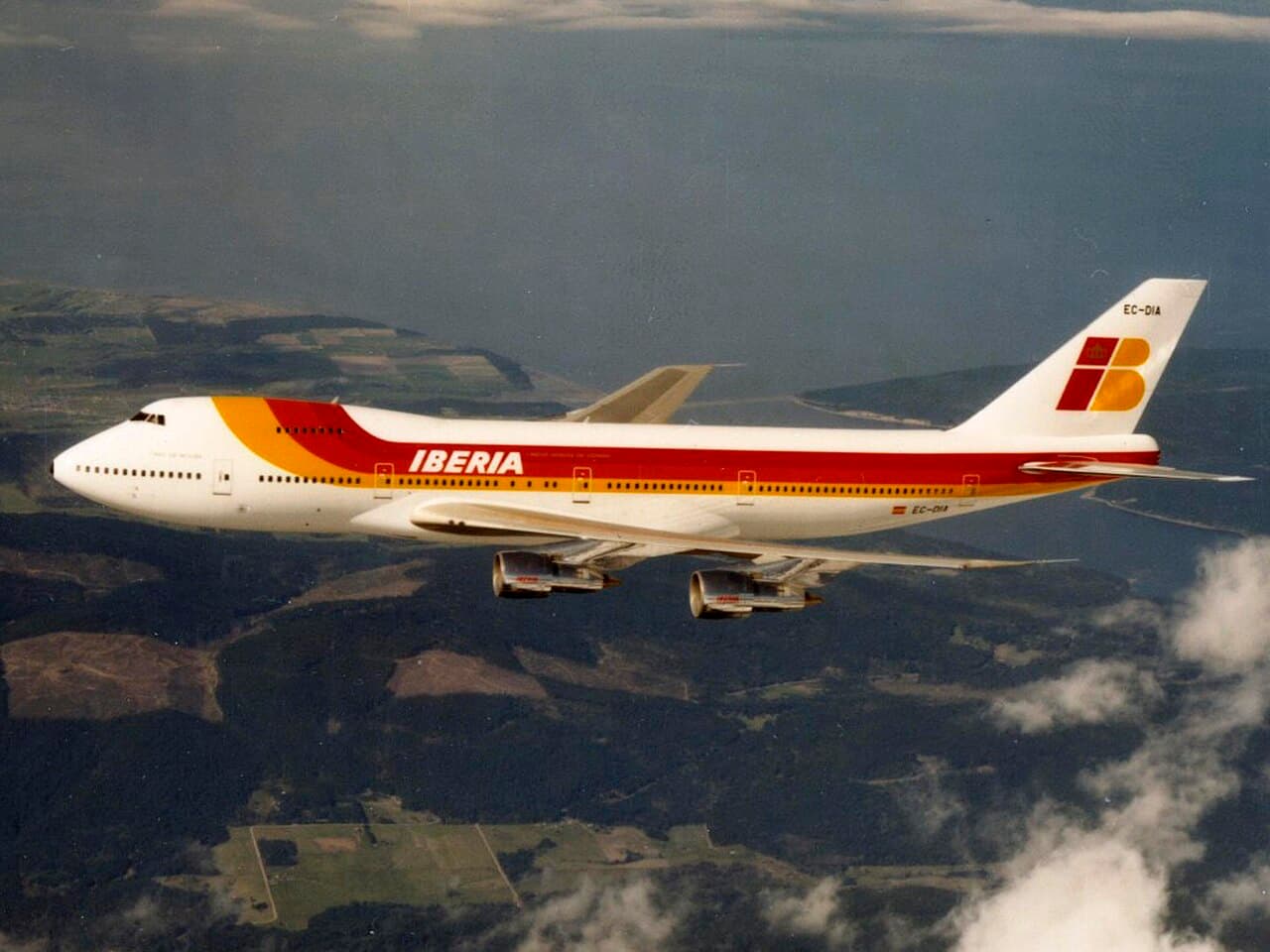
Boeing 747
Like most airliners, the 747's airframe is built mainly from aluminium alloys.
Photo: Wikimedia Commons
Bauxite
This reddish ore of aluminium hydroxides and oxides is the starting point for nearly all aluminium.
Photo: Wikimedia Commons
Washington Monument
The monument's tip is a small aluminium pyramid installed in 1884.
Photo: Wikimedia Commons


Research
No research on Aluminium yet
When Bhavya publishes a project that studies Aluminium, it will be linked here.