Palladium
Transition metal · Period 5 · Group 10 · d-block
The metal sponge that soaks up hydrogen and stitches molecules
- Atomic mass
- 106.421 u
- State at 25 °C
- Solid
- Electronegativity
- 2.2
- Melting point
- 1,554.9 °C
- Boiling point
- 2,962.9 °C
- Configuration
- [Kr] 4d10
Nucleus drawn at reduced count for clarity. Drag to rotate.
Palladium, explained
Video lesson in production
Bhavya’s explainer for this element will play here.
Overview
Palladium is a soft, silvery-white platinum-group metal in group 10. It has an unusual ground-state configuration, [Kr] 4d10, with a completely filled d subshell and no electron in the 5s orbital. Palladium is the least dense and lowest-melting of the platinum metals (1,555 °C), and it is more reactive than platinum: it dissolves in hot nitric acid and aqua regia. Its common oxidation states are 0, +2 and +4, and palladium(II) complexes are almost always square planar.
Palladium's best-known trick is absorbing hydrogen. At room temperature it can take up roughly 900 times its own volume of the gas, as hydrogen molecules split on the surface and the atoms slip into gaps in the metal lattice. Hot palladium membranes let only hydrogen pass, a way to make ultrapure gas. The same ability to bind and release small molecules makes palladium a superb catalyst. Most of it goes into catalytic converters for petrol cars, and palladium-catalysed cross-coupling reactions, recognised by the 2010 Nobel Prize in Chemistry, are used to build drugs, pesticides and OLED materials.
Discovery
William Hyde Wollaston isolated palladium in 1802 while working on South American platinum ore, and named it after the asteroid Pallas, discovered earlier that year. Rather than publish, he offered the metal for sale anonymously through a London shop in 1803. The Irish chemist Richard Chenevix bought a sample and declared it a fake alloy of platinum and mercury. Wollaston revealed himself as the discoverer only in 1805, when he published his method.
- Where it’s found
- Palladium is found in nickel-copper sulfide and platinum ores, and about 80% of supply comes from Russia's Norilsk deposits and South Africa's Bushveld Complex.
- What it’s used for
- Catalytic converters
- Multilayer ceramic capacitors
- Cross-coupling catalysts
- Hydrogen purification membranes
- Dental alloys
- White gold jewellery
- In living things
- Palladium has no known biological role. It is of low toxicity, although palladium in dental alloys can cause allergic reactions in some people.
- Safety
- Bulk palladium is safe to handle; fine palladium powder or palladium on carbon loaded with hydrogen can ignite solvents and must be kept wet or under inert gas.
How it compares
Where Palladium sits among all 118 elements on the trends that shape the table.
- Electronegativity2.2Pauling
#16 of 100 elements with data
- Ionization energy804kJ/mol
#31 of 104 elements with data
- Atomic radius140pm
#52 of 95 elements with data
- Electron affinity54.2kJ/mol
#46 of 109 elements with data
- Density12g/cm³
#32 of 114 elements with data
- Melting point1,830K
#24 of 110 elements with data
- Density
- 12 g/cm³
- Atomic radius
- 140 pm
- Covalent radius
- 120 pm
- Molar heat
- 25.98 J/(mol·K)
- Appearance
- silvery white
- Discovered by
- William Hyde Wollaston
Inside the atom
46 electrons arranged in 4 shells: 2 · 8 · 18 · 18.
Orbital diagram
1s2 2s2 2p6 3s2 3p6 4s2 3d10 4p6 4d10 · shorthand [Kr] 4d10
- 1s2
- 2s2
- 2p6
- 3s2
- 3p6
- 4s2
- 3d10
- 4p6
- 4d10
Each box is an orbital holding up to two electrons of opposite spin. Highlighted subshells hold the valence electrons that decide how Palladium bonds.
Ionization energies
Signature reactions
The chemistry Palladium is known for.
Redox · Heterogeneous catalysis
Oxidizing carbon monoxide
Carbon monoxide and oxygen both stick to the palladium surface, where they combine and leave as carbon dioxide. Palladium converters handle this job, along with burning unburnt hydrocarbons, in most petrol cars.
Conditions: palladium catalyst, hot exhaust
Catalysis · Organic synthesis
Suzuki cross-coupling
Palladium joins an aryl bromide and an aryl boronic acid by forming a new carbon-carbon bond, here making biphenyl. Akira Suzuki shared the 2010 Nobel Prize for this reaction, which is used to make medicines such as the blood-pressure drug losartan.
Conditions: Pd(0) catalyst, base, warm solvent
Redox · Dissolution
Dissolving in aqua regia
Nitric acid oxidizes the metal while chloride ions capture palladium(II) as the red-brown tetrachloropalladate complex. This is the first step in refining palladium and in recycling it from scrap catalysts.
Conditions: warm aqua regia
Where you’ll meet it
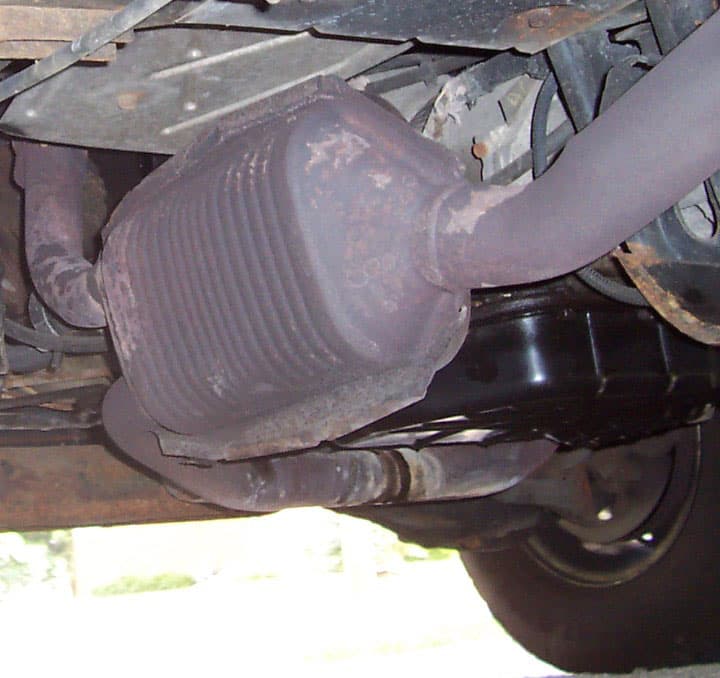
Catalytic converter
Palladium coats the honeycomb inside most petrol-engine catalytic converters.
Photo: Wikimedia Commons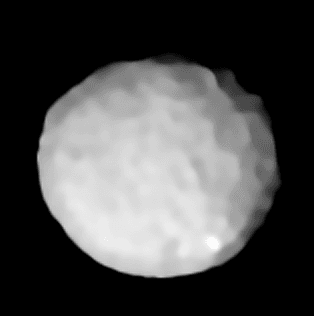
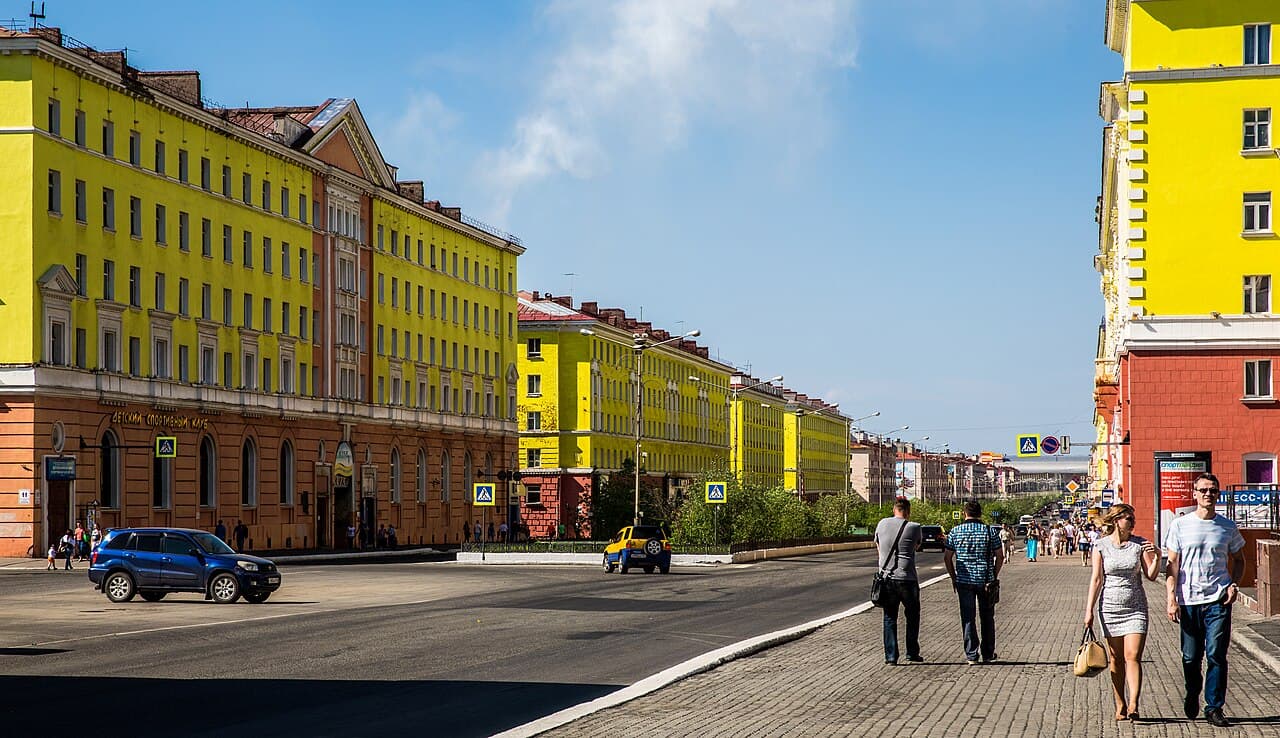
Norilsk
The Arctic city of Norilsk sits on the world's largest palladium deposits.
Photo: Wikimedia Commons
Ceramic capacitor
Many multilayer ceramic capacitors use palladium or palladium-silver electrodes between their ceramic layers.
Photo: Wikimedia Commons


Research
No research on Palladium yet
When Bhavya publishes a project that studies Palladium, it will be linked here.